
Presented by: Theatre Guild Student Society
Reviewed: 16 April 2026
Theatre Guild Student Society brings a particularly challenging work to the stage for their first production of 2026, and they pull it off remarkably well. This version of the German play Spring Awakening (note that this is the play, not the musical adaptation) is an English translation by Edward Bond, who apparently provided the first complete translation of the work without censorship. The subject matter is at times confronting, and both the ticket website and the pre-show announcement included trigger warnings for the audience (in particular, portrayals of rape and suicide, and references of child abuse).
The story follows a group of teenagers dealing with, on varying levels, hormones, mental illness, and dealing with the shame of sex imposed by the older generation. The play also serves as a cautionary tale of the dangers of suppressing sexual education.
The cast is filled with talent and energy. Chloe Browne as Melchior was striking. She portrayed the angst and teenaged physical discomfort of Melchior with consistency and believability, and drew the eye every time she appeared on stage. Eva Wilde portrays Wendla with the right balance of innocence and the curiosity of growing up, and her scene with Lucy Thompson (Frau Bergmann) in Act 2 is particularly memorable. April Strevens gives Moritz loads of anxious energy, showing the character’s constant internal battle, but at times would benefit from moments of stillness and slightly slower dialogue to add weight to the moments leading to Moritz’s suicide and later ghostly visitation to Melchior. Georjette Mercer’s moments as Frau Gabor are well-paced and she brings a strong sense of motherly warmth to the role. The supporting cast are well-placed in their various roles, with many of them playing multiple characters throughout the play.
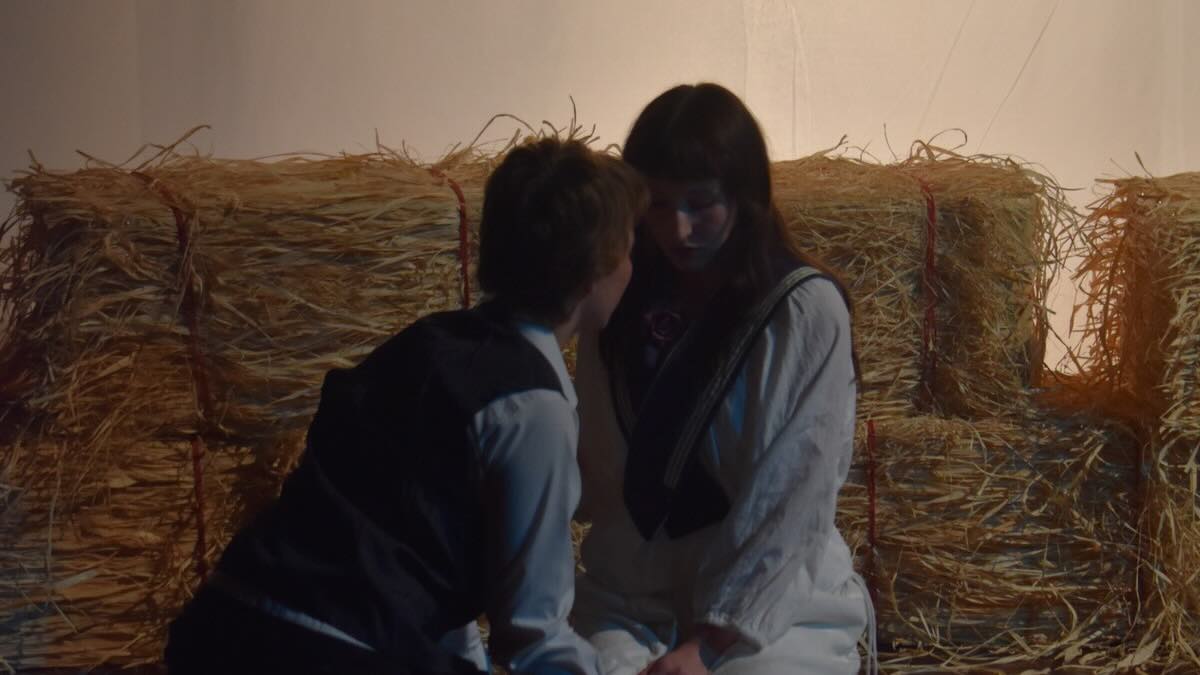
The set and costuming is minimalistic, implying an old-world sensibility and a sterility that echoes the strict conservatism of the late 1800s. This works perfectly in the Little Theatre, making the most of the small stage and taking advantage of the round.
There are some very confronting scenes in this play, and, on the whole, director Jessie Chugg has approached these with sensitivity and thoughtfulness. While the moments leading up to Melchior’s assault of Wendla could have used more tension and a longer lead up, the use of a backlit sheet of fabric to silhouette the most violent moments are very effective, as is the use of a similar effect in Moritz’s suicide. The entire script and the content within has clearly been closely examined by director, bringing an appropriate sensitivity to the entire work.
The one area which lacks the finesse of the rest of the production is scene changes. For a minimalist set, these scene changes are at times very slow. Cast are left standing on the stage while crew take pieces off and on, leaving you to wonder why more of these changes haven’t been incorporated into the cast’s blocking for a more seamless flow. There were also times where the set and cast would be in place for the next scene, but the lighting took another five seconds or more to come back up. This, at least, is an element that will hopefully be tightened for the final performances.
There are only a few remaining chances to see this high quality production, and at only $15 for an adult, there are no excuses to not get a ticket!
Reviewed by Kristin Stefanoff
Venue: The Little Theatre, Adelaide University
Season: 15 – 18 April 2026
Duration: 150m including interval
Tickets: $10 – $15 (plus booking fee)
Bookings: https://www.trybooking.com/events/landing/1542132