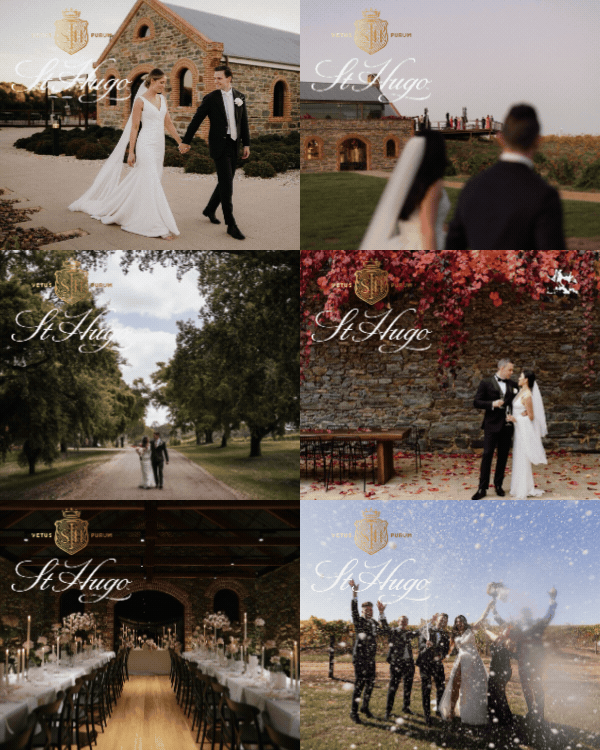
The building now filled with long lunches, celebrations and glasses of premium Barossa wine has witnessed more than 160 years of South Australian winemaking history.
Long before it became the home of St Hugo, the ironstone winery at Rowland Flat belonged to early Barossa settler William Jacob.
Johann Gramp, who planted his first Barossa vines in 1847, reportedly worked the first vintage at the winery in 1859. Almost 60 years later, his grandson Hugo Gramp purchased the property from the Jacob family.
Then, nearly a century after that, Hugo’s son Colin helped breathe new life into its surviving ruins as the permanent home of a wine created in his father’s honour.

It means today’s celebrations at St Hugo unfold in a place where several generations of Barossa history meet.
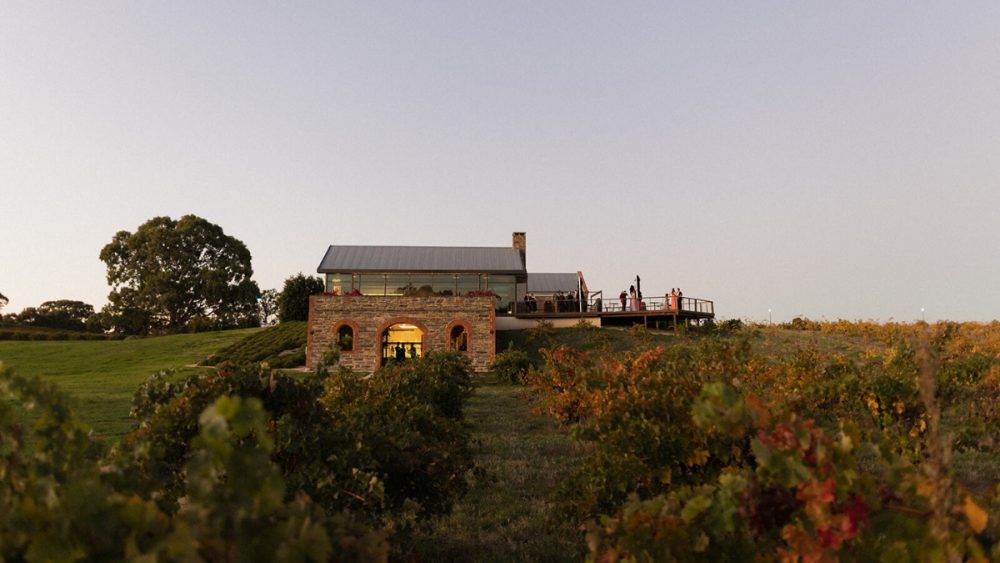
The restored cellar door and restaurant combine original ironstone walls and arched windows with recycled timber, glass and contemporary architectural details, overlooking vineyards, the Kitchen Garden and the Barossa Ranges.
Even the drive into the property carries a family connection. The unusual cork trees lining the approach were planted by Colin more than 50 years ago, creating a fitting entrance to a destination built around wine.
The beauty of the property makes even more sense once you know the story behind its name.
Hugo Gramp took control of the family business in 1920 and led Gramp & Sons through a significant period of growth. His life was cut short in 1938 when he died in the Kyeema air disaster alongside fellow South Australian wine leaders Tom Hardy and Sidney Hill Smith.
The three men had been travelling east to advocate for Australia’s wine industry when their plane crashed in Victoria’s Dandenong Ranges, killing all 18 people on board.
Decades later, St Hugo was created as a tribute to Hugo and his contribution to the Australian wine industry. Its first wine was made from the celebrated 1980 Coonawarra Cabernet Sauvignon vintage and released in 1983.
The addition of “St” was inspired by the European tradition of naming vineyards after saints in the hope of bringing them good fortune.
The permanent home of St Hugo opened to visitors in 2016 following an extensive restoration that retained the soul of the old winery while creating an entirely new destination within its historic walls.
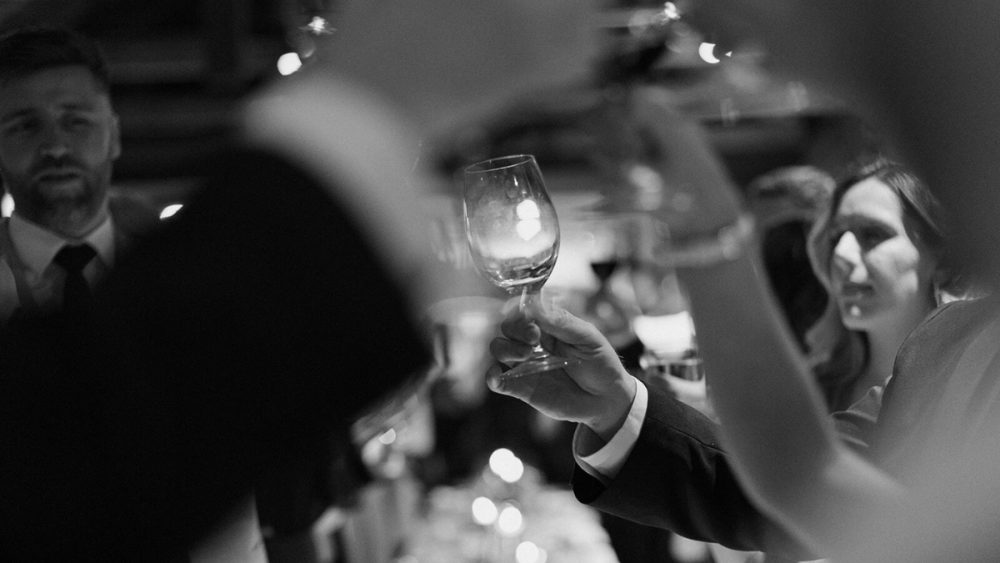
Today, those walls surround an award-winning restaurant, premium tasting lounge and a collection of indoor and outdoor spaces that can be transformed for private celebrations and corporate gatherings.
There are five event spaces across the property, including the Wine Lounge, the intimate Hugo Gramp Room, the Courtyard, an expansive outdoor deck with vineyard views and the Australian Good Food Guide hatted St Hugo Restaurant.
For larger celebrations, corporate events and special occasions, the venue can also be exclusively hired, allowing guests to enjoy private use of the property and its facilities, subject to a minimum spend.
The team regularly hosts everything from board meetings, leadership retreats and corporate workshops to birthdays, private lunches and long dinners with friends.
“At St Hugo, we believe the most memorable events are those that feel effortless for the client and unforgettable for their guests,” St Hugo Visitation and Functions Coordinator Brittany Frost said.
Events are built around what the Barossa does best: exceptional wine, carefully considered food and a setting that makes even a business lunch feel like a day away.
“The combination of our captivating setting and heritage architecture, exceptional food and wine, and dedicated team creates an experience that is uniquely Barossa,” Brittany said.
“Whether it’s a corporate gathering or a private celebration, we work closely with every client to bring their vision to life with genuine hospitality and attention to detail.”
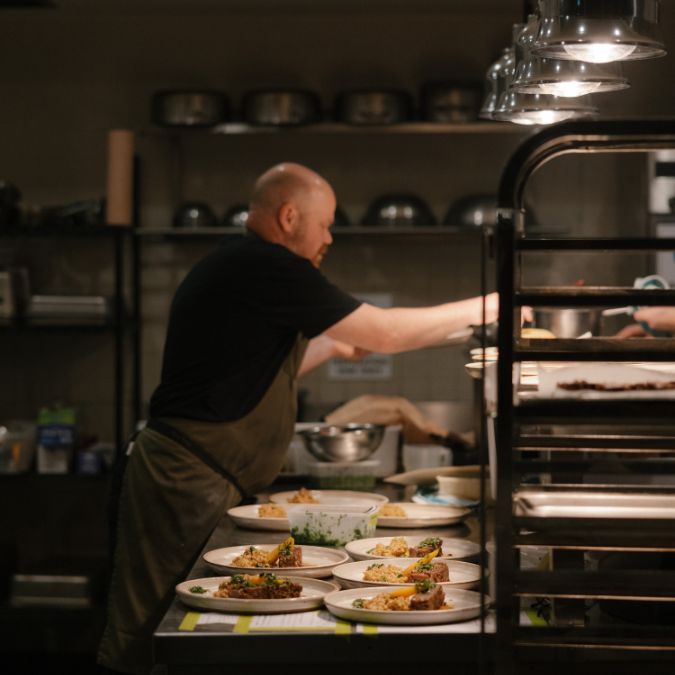
While the history provides the setting, Executive Chef Simon Hicks ensures St Hugo is not trapped in the past.
Simon returned to South Australia after building more than 15 years of culinary experience, including time at well-known British restaurants such as Scott’s of Mayfair and as Head Chef at Mark Hix’s flagship Soho restaurant.
At St Hugo, that international experience is applied to produce grown just metres from the kitchen.
Simon builds his menus around what each season brings, drawing ingredients from St Hugo’s expansive Kitchen Garden and working with local suppliers to create relaxed, flavour-packed dishes designed to sit alongside the winery’s premium wines.

For group dining, there are two set-menu experiences.
The Two by Four is a chef-selected lunch featuring four dishes across two courses, with the option to add dessert.
The Epicurean Cellar Menu takes the experience further, with four courses paired with treasures from the St Hugo cellar. Back-vintage, rare and top-tier wines are brought out for the occasion, giving guests the opportunity to taste bottles they may not otherwise encounter.
Functions are primarily centred around sit-down dining, keeping the experience relaxed and considered. An optional canapé package is also available for private functions held from Tuesday to Thursday and during evening events.
For groups wanting to make more of the occasion, the experience can begin well before the first course arrives.
Guests can gather for welcome drinks in the Courtyard, take a guided walk through the St Hugo Kitchen Garden with the chef or settle into a premium group wine tasting before lunch or dinner.

Smaller gatherings can be hosted in the property’s more intimate spaces, while larger private functions can take over the restaurant and surrounding areas.
As the afternoon light begins to fade across the vineyards, the venue changes again. Lights flicker across the Courtyard, the original ironstone takes on a warm glow and glasses are topped up as guests settle in for the evening.
Located less than an hour from Adelaide, St Hugo feels far enough away for a proper escape without requiring a long trip across the state.
For those wanting to host an event at St Hugo, it offers more than hiring a function room. It is an opportunity to bring people together inside the remains of a 19th-century winery, on land tied to generations of one of the Barossa’s best-known wine families.
More than 160 years after Johann Gramp first worked a vintage here, people are still gathering within the same walls to eat, drink and mark occasions worth remembering.
St Hugo
Where: 2141 Barossa Valley Way, Rowland Flat
To book your next event, head here.
For more information, click here.